From self-description to relational intelligence.
What I learned building Refract — and why Overtone made me reopen the thesis.
In April 2026, during a painful breakup, I realised that the place with the most context about my relationships wasn’t a dating app or a questionnaire. It was AI.
I had used it to replay conflicts, process emotions, question my own role, and make sense of what had happened. That led to a simple question: why does all of that context disappear the moment I start dating again?
Could the relationship data we generate while healing help us make better relationship decisions next time? That question became Refract — an AI relationship concept built around turning past relationship experience into something useful for what comes next.
Taylor Swift can turn heartbreak into songs. What if the rest of us could turn ours into something useful too?
The original April deck and Figma version history are included in the appendix.
Self-description is not self-knowledge.
Dating profiles have two data problems.
The presentation gap
We don’t describe ourselves; we present ourselves. Everyone knows “communication matters” is the right answer. Saying it tells you nothing about what someone does when communication gets uncomfortable.
The self-knowledge gap
Even perfect honesty is limited by what we know about ourselves. People can sincerely want one kind of partner and keep responding to a very different one. We often know who we want to want — not what actually makes us feel safe, anxious, respected, or trapped.
So there are three layers of a person a matching system could learn from:

These three can overlap. They often don’t. The gaps between them are where matching becomes interesting.
The problem isn’t that profiles are shallow. It’s that matchmaking depends too heavily on conscious self-description — profiles are optimised for legibility, not compatibility.
The same person, at three different moments
Imagine the same person speaking at three points in time:
Right after a breakup
“I always give too much.”
Months later, reflecting
“I tend to over-function when I feel someone pulling away.”
After a first date
“He replied slowly, so I immediately started trying harder.”
None of these statements alone is enough.
The first is emotionally charged. The second is more reflective, but still retrospective. The third captures a real behavior — but only once. Together, they begin to reveal something none of them says directly:
Under relational uncertainty, this person tends to increase pursuit and self-sacrifice..
No single version of us is the ground truth.
A breakup reveals things a dating interview never will. But it is not inherently more truthful. Every relational state exposes something different — and introduces its own distortion.
| State | What it reveals | What can distort it |
|---|---|---|
| Breakup / conflict | Triggers, defenses | Blame, emotional amplification |
| Healing | Reflection, accountability | Retrospective rationalisation |
| Dating | Values, aspirations | Self-presentation |
| Relationship | Repeated behavior, outcomes | Habituation, context |
Every state contains signal. Every state contains bias. The value is in comparing them.
A relationship lifecycle, not a signup flow.
The Cycle: Breakup / Conflict → Healing → Reflection → Readiness → Dating → Relationship → Conflict / Growth
Instead of asking people to construct a new dating identity from scratch, Refract gradually builds a relational model from what they already reveal over time — through past AI conversations, voice reflections, guided interviews, post-date check-ins, and relationship outcomes.
Bring in relationship history
Collect relational evidence across different moments and emotional states.
AI conversationsVoice reflectionsGuided interviewsPost-date check-ins
Turn stories into relational patterns
Look beyond what someone says about themselves to identify recurring patterns in how they interpret, respond, connect, withdraw, repair, and set boundaries.
Build relational readiness
Before matching, help users surface blind spots, unresolved carryover, needs, and boundaries.
Wanting to date is not always the same as being ready to build a relationship.
Make better introductions
Use deeper relational patterns — alongside values, life direction, and readiness — to make more informed introductions without pretending to predict chemistry.
AI narrows avoidable incompatibility. Real life decides the spark.
Inside DISTILL: how stories become a relational model
The hardest part is not collecting emotional data. It is turning subjective stories into useful signals without mistaking narrative for truth.
Algorithm logic — how narratives become relational patterns
State-tagged narratives
Every narrative keeps its relational state and timing. A breakup reflection and a post-date reflection are useful for different reasons.
Extract behavior, not labels
Instead of jumping to labels like “anxiously attached”, Refract breaks a narrative into observable relational signals.
trigger→interpretation→response→need→boundary→repair
Look across time
The model looks for repetition, contradiction, and change across different states. One emotional statement is not enough to become a pattern.
Breakup“I always give too much.”
Months later“I tend to over-function when I feel someone pulling away.”
Post-date“He replied slowly, so I immediately started trying harder.”
Across states, a more credible pattern begins to emerge: this person may increase pursuit and self-sacrifice under relational uncertainty.
Hold hypotheses, not verdicts
Patterns are stored as evidence-backed hypotheses with different levels of confidence. New dates and relationships can strengthen, weaken, or overturn them.
- Hypothesis
- Pursuit behaviour increases under relational uncertainty.
- Confidence
- Medium → High
- Evidence
- Repeated across multiple relational states.
The goal was never an AI that knows your personality. It was a model that gradually learns how you relate.
A good match is not one score. It has layers.
Are we building toward compatible lives?
ValuesRelationship intentLife directionAmbition and lifestyleFamily expectations
What happens when the relationship becomes real?
Conflict and repairCloseness vs. spaceEmotional expressionBoundariesCommunication under stressReassurance vs. autonomy
Are they ready to build something new?
Emotional availabilityUnresolved attachmentDating motivationCapacity for commitmentSpace for a new relationship
A highly compatible person at the wrong relational moment can still become the wrong outcome.
Not computed. Given room.
We don’t try to compute love. We reduce avoidable incompatibility and create a better chance for chemistry to happen in real life.
AI narrows avoidable incompatibility. Real life decides the spark.
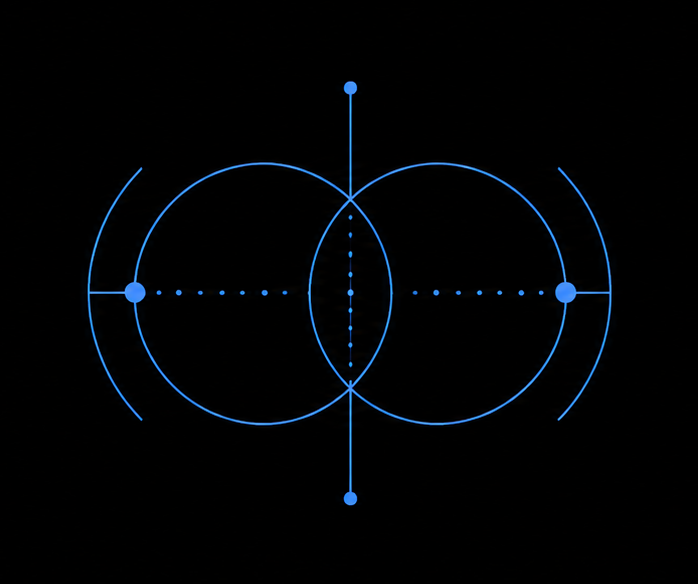 01
The MirrorResonance
Someone with similar relational rhythms — ways of approaching closeness, conflict, emotional needs, or the world.
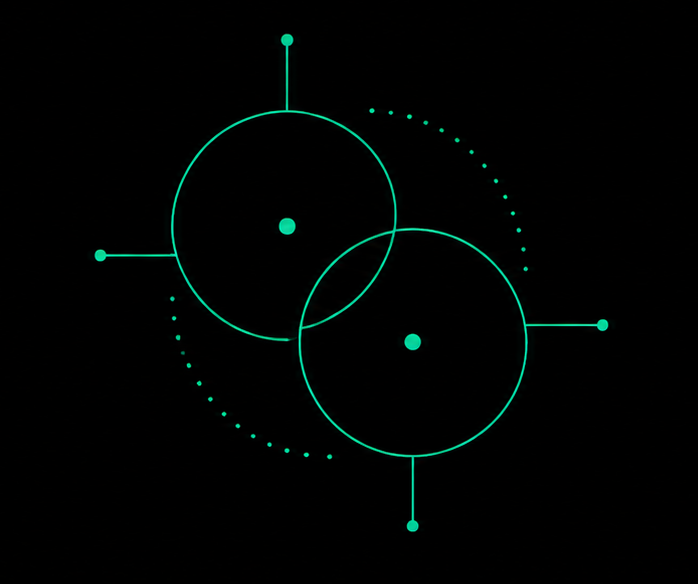 02
The ComplementCounterbalance
Someone whose differences may create balance rather than friction.
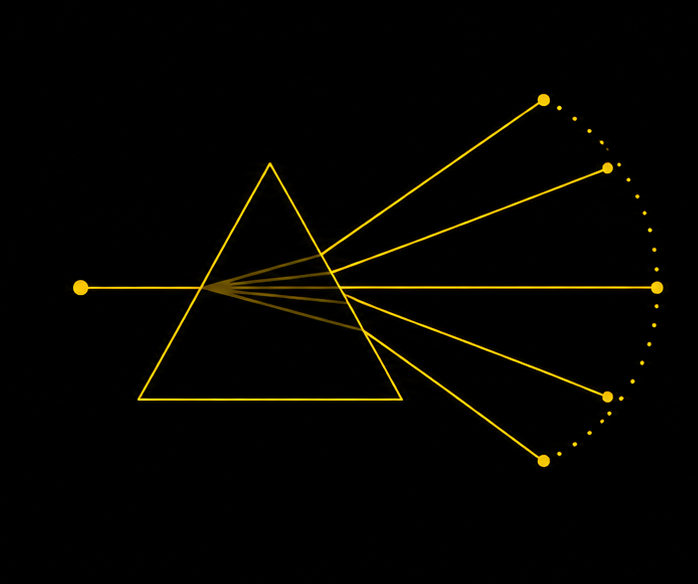 03
The PrismWildcard
Someone outside the model’s strongest assumptions — preserving room for attraction the system could not have predicted.
Precision for the foundation. Exploration for the spark. We don’t compute chemistry — we preserve the conditions in which it can surprise us.
Same direction, different centre of gravity.
Discovering Overtone felt surprisingly familiar. Both products move beyond profiles, use conversation to understand people more deeply, curate rather than maximise matches, and leave chemistry to real life.
Where the thinking overlaps
Where Refract puts more weight
Longitudinal + state-aware
Overtone starts learning when someone enters the matchmaking experience. Refract starts earlier and observes longer — across breakup, healing, crushes, dating, post-date reflection, and eventually relationships.
Both use conversation. The difference is that Refract treats when a conversation happens as part of what that conversation means.
Recurring relational patterns
Refract puts more weight on patterns that repeat across time, rather than treating any single interview or self-description as the model of the person.
These can include how someone responds to uncertainty, conflict, distance, closeness, boundaries, reassurance, or repair.
The goal is not only to understand who someone is, but to identify what repeatedly happens in the way they relate.
Those patterns serve two purposes: helping the user see themselves more clearly, and helping the system make better introductions.
Reflect inward, connect outward
Refract was never designed only to find someone a better match.
The same relational model first acts as a mirror — surfacing recurring patterns, blind spots, unresolved carryover, and helping someone become more ready for what comes next.
Then it acts as a matching layer — using that deeper understanding to identify people who may fit not only what the user says they want, but how they actually relate.
Understand the pattern. Grow from it. Then use it to connect differently.
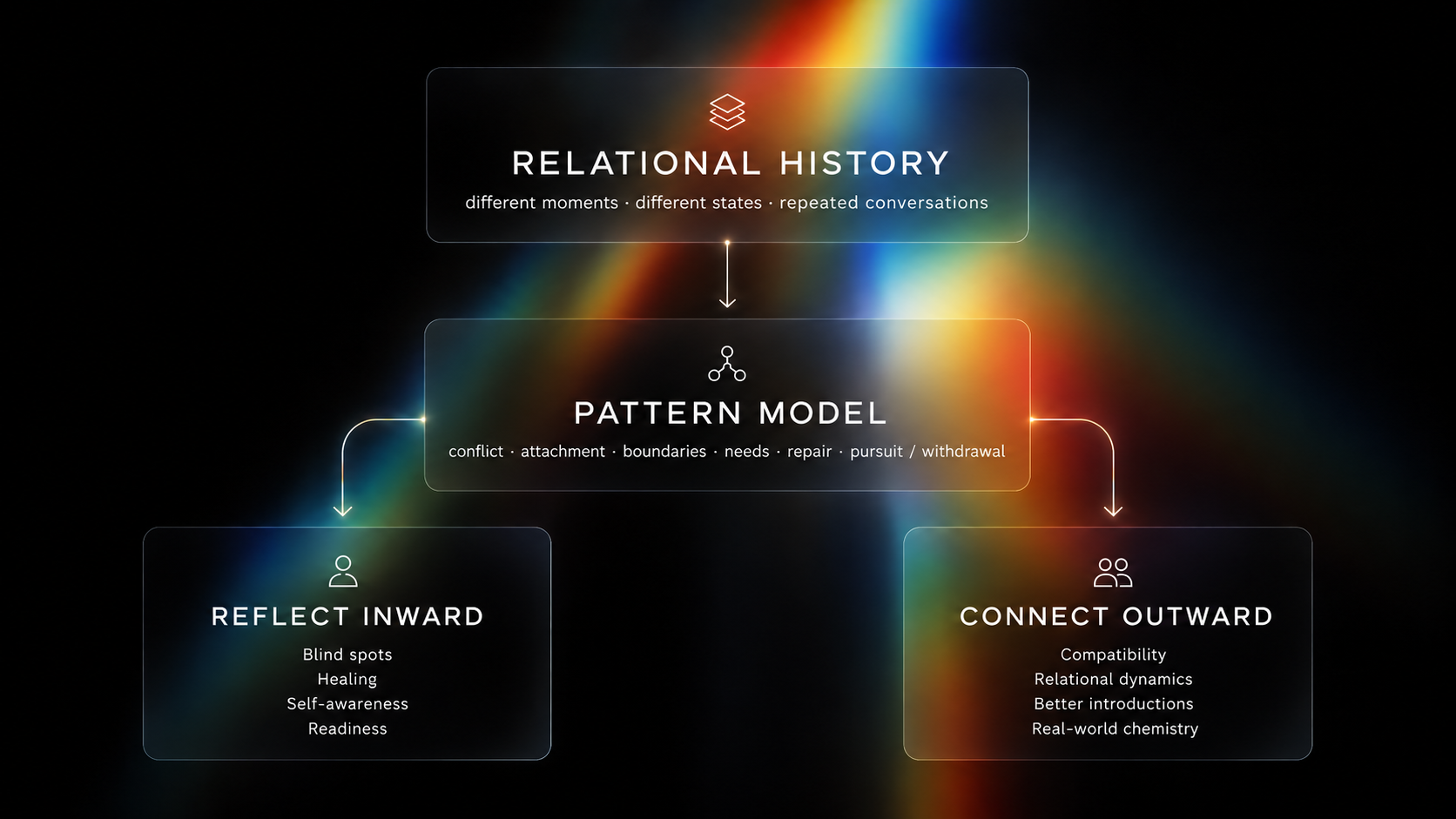
That is also where the name Refract came from: the same light can reveal something about itself, and also be redirected to connect somewhere new.
What I would keep pushing.
Self-report is evidence, not ground truth.
What people say matters. What they repeatedly do matters too. A relational model should be able to hold both.
Model people across states, not as snapshots.
Breakup, healing, dating and stable relationships reveal different parts of the same person and introduce different biases. Reliable patterns emerge through comparison over time.
Separate user belief from model hypothesis.
A user should be able to disagree with the model without forcing either side to become “the truth”.
Readiness is independent from compatibility.
Wanting a relationship does not necessarily mean being ready to sustain one. A serious matchmaking product should know when to introduce and when to slow down.
Never optimise romance like content recommendation.
If someone repeatedly chooses the same unhealthy dynamic, “more of what you clicked before” may be exactly the wrong objective.
Preserve uncertainty.
A good model knows what it knows, and deliberately explores what it doesn’t.
AI should narrow avoidable incompatibility without narrowing human possibility.
The original material.
Refract Deck — April 2026